




The Casa de la Libertad is Bolivia’s first national historic monument and the most important museum in the country. It is here that Bolivia’s independence was forged and the Republic was born, making it one of the most symbolic and essential places to visit in Sucre.
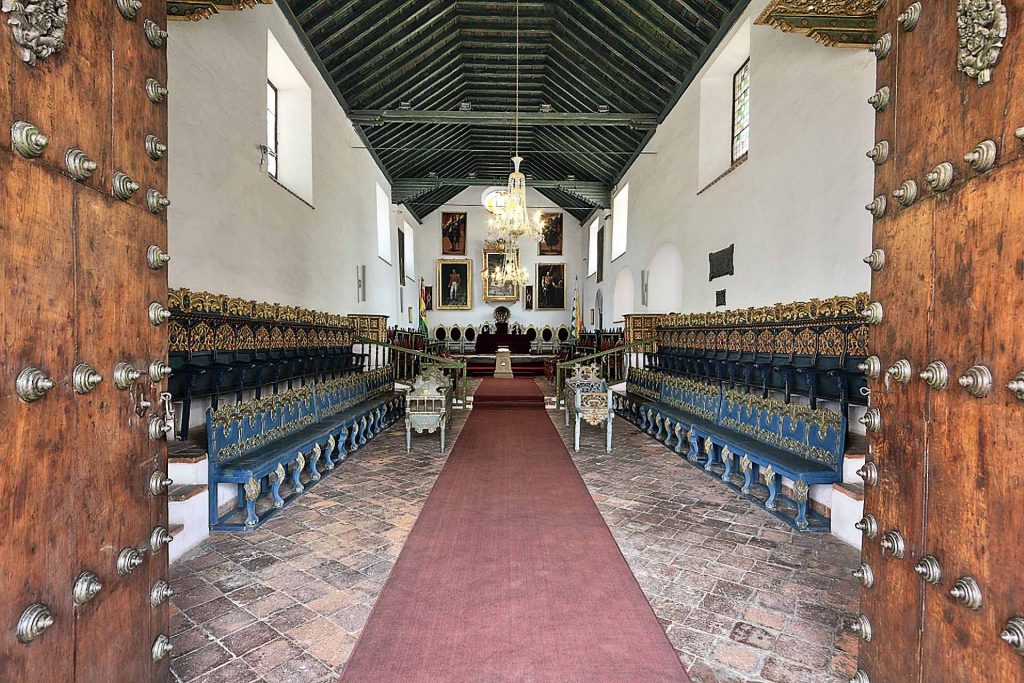
Originally built in 1621 by the Jesuits as part of the Universidad Mayor Real y Pontificia de San Francisco Xavier de Chuquisaca, the building is an outstanding example of colonial architecture. The museum occupies the former cloister, surrounded by elegant single-level galleries supported by solid stone columns. Notable features include the massive cedar entrance door studded with bronze nails and the richly decorated Independence Hall, with its Hispano-indigenous carved choir stalls, gilded details, and intricate Mudéjar-style coffered ceiling.
Originally used as the university’s ceremonial hall where doctoral theses were defended, this space became the stage of history on August 6, 1825. On that day, the General Assembly of the Provinces of Upper Peru proclaimed independence and founded the Bolivian Republic. Here, the first constitution—associated with Simón Bolívar—was approved, and Antonio José de Sucre was sworn in as the first president.
Converted into a museum in the 20th century, the Casa de la Libertad now houses invaluable national treasures. In the Independence Hall, visitors can see the original Act of Independence, portraits of key figures such as Bolívar, Sucre, and José Ballivián, as well as historic swords used in decisive battles. Other rooms include the Senate Chambers, displaying portraits, decorations, and personal objects of Bolivia’s presidents, and the Marshal Sucre Room, dedicated to one of the country’s most important heroes.
Highlights also include the famous Bandera de Macha, one of the earliest patriotic symbols in the region, and the Hall of Heroes, where visitors can learn about figures such as Juana Azurduy de Padilla and Manuel Ascencio Padilla. The elegant Hall of Honor features fine 19th-century French furniture, adding another layer to the museum’s historical narrative.
The library, archive, and map collection are accessible to researchers, reinforcing the Casa de la Libertad as a living center of historical knowledge.
👉 Even if the official website is sometimes unavailable, the museum is open to visitors and offers guided tours that make Bolivia’s history accessible and engaging for all ages, including families.
👉 Visiting this landmark is not only one of the top things to do in Sucre, but also an essential experience to truly understand Bolivia’s past and identity.


